
Nimitz 2004 UFO Encounter

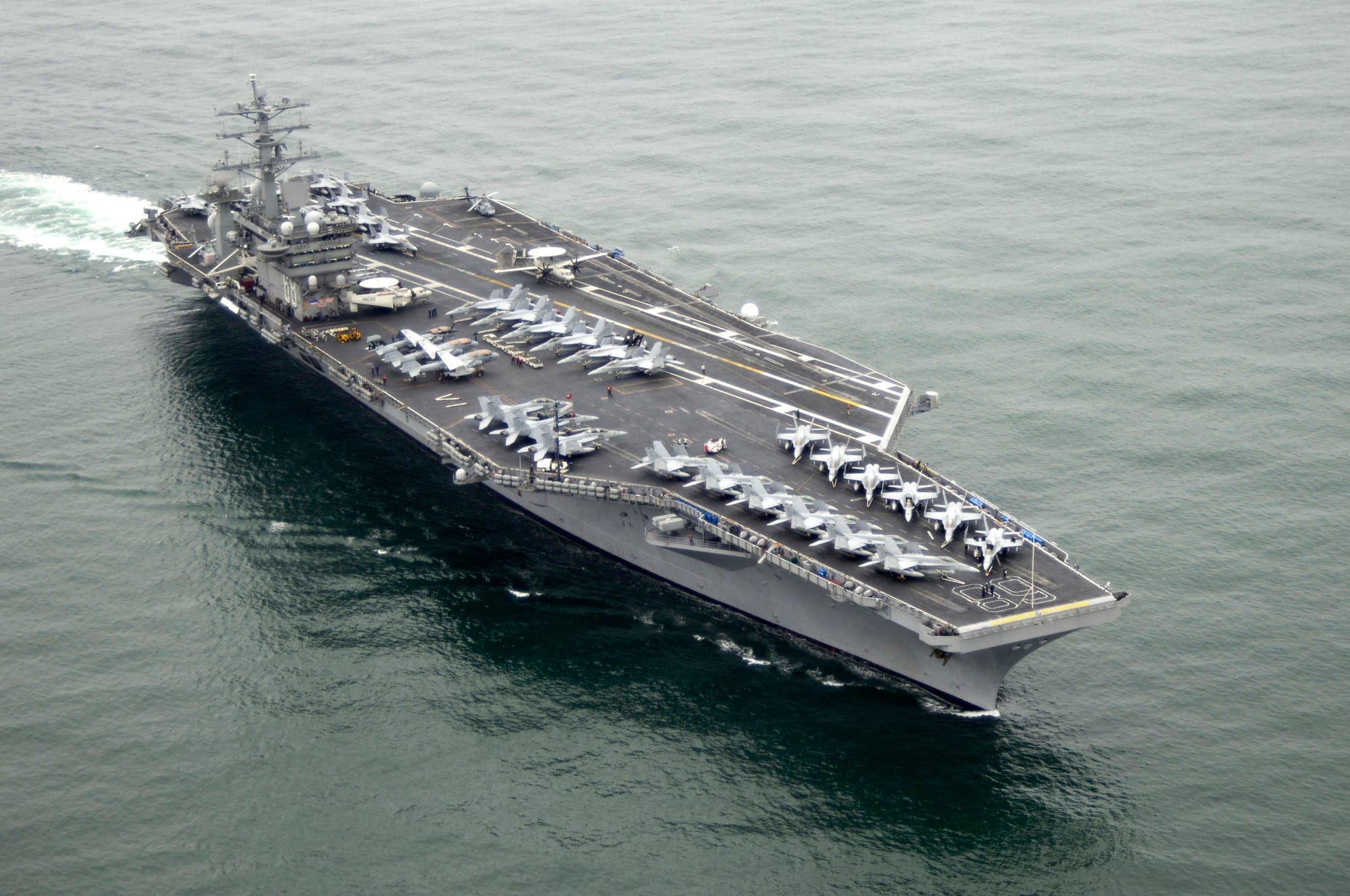
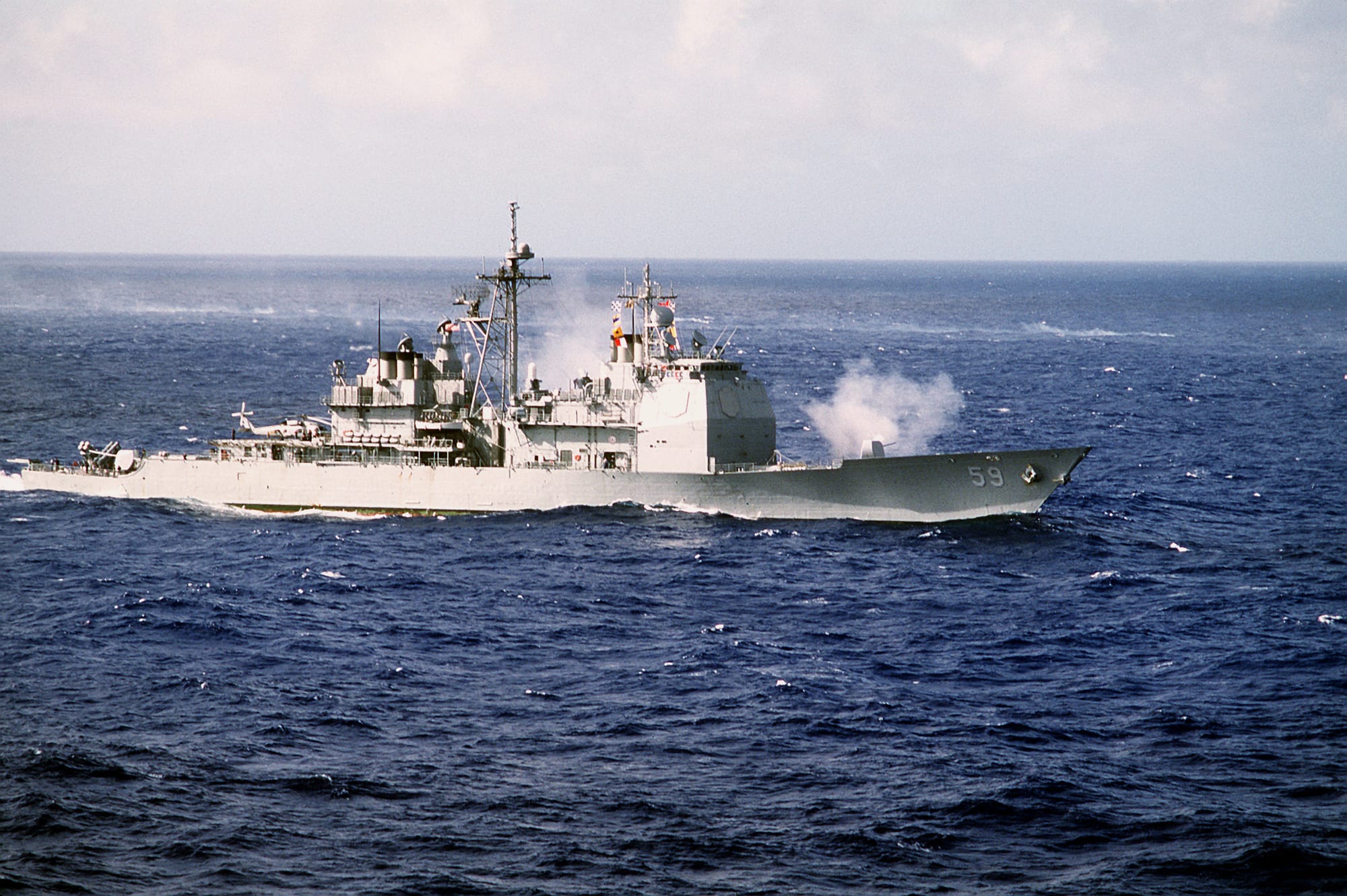
Between approximately November 2 and November 14, 2004, radar operators aboard the USS Princeton (CG-59), an AEGIS-equipped guided missile cruiser assigned to the USS Nimitz Carrier Strike Group, tracked multiple unidentified aerial objects operating off the southern California coast. According to the testimony of Senior Chief Kevin Day, the ship's Air Intercept Controller, the objects appeared at altitudes above 80,000 feet and descended to approximately 50 feet above the ocean surface, behavior inconsistent with any known aircraft in the US or allied inventory.
On November 14, two F/A-18F Super Hornets from VFA-41 "Black Aces" were vectored to intercept. Commander David Fravor and Lieutenant Commander Jim Slaight reported visual contact with a white, oblong object approximately 40 feet in length, hovering over churning ocean with no visible wings, rotors, propulsion, or exhaust. When Fravor maneuvered to approach, the object mirrored his movement then accelerated away at extraordinary speed. A subsequent intercept by Lieutenant Commander Chad Underwood resulted in the capture of the FLIR1 infrared footage.
The Department of Defense officially released FLIR1 on April 27, 2020, confirming its authenticity and stating the aerial phenomena depicted remain characterized as unidentified. The case has been investigated by the Advanced Aerospace Threat Identification Program (AATIP) and is referenced in public reporting by the All-domain Anomaly Resolution Office (AARO).
FLIR1: Infrared footage captured by Lieutenant Commander Chad Underwood aboard a US Navy F/A-18F Super Hornet on November 14, 2004. Officially declassified and released by the Department of Defense, April 27, 2020. This is a locally hosted copy of the US Government public domain footage. Original source: Wikimedia Commons ↗
The November 14, 2004 Intercept
At approximately 0700 local time on November 14, 2004, the USS Princeton vectored two F/A-18F Super Hornets from VFA-41 "Black Aces" to investigate radar returns that had been appearing on the ship's AN/SPY-1 AEGIS radar system for approximately two weeks. The aircraft were commanded by Commander David Fravor, VFA-41's Commanding Officer, with Lieutenant Commander Jim Slaight as Weapons Systems Officer. A second F/A-18F carrying Lieutenant Commander Alex Dietrich flew as the escort aircraft.
Upon reaching the intercept coordinates, Fravor reported observing a section of ocean surface churning white, as if disturbed from below. Above this disturbance, he described a white oblong object with no visible control surfaces, wings, rotors, or exhaust signature, estimated at approximately 40 feet in length and roughly resembling a Tic-Tac breath mint. The object hovered at low altitude with no apparent means of propulsion.
Fravor initiated a descending spiral toward the object. He reported it mirrored his descent before accelerating away at extraordinary speed when he reversed course toward it. The Princeton subsequently reported the object at the strike group's pre-briefed rendezvous point, approximately 60 nautical miles distant, before Fravor's aircraft could reach that location. Lieutenant Commander Dietrich provided a corroborating visual account, describing publicly for the first time in a CBS 60 Minutes interview in May 2021 that the object behaved in ways inconsistent with her understanding of aerodynamic possibility.
AEGIS Radar Tracking and the FLIR1 Footage
Prior to the November 14 visual encounter, Senior Chief Kevin Day, Air Intercept Controller aboard the Princeton, reported tracking unidentified objects on the ship's AEGIS SPY-1 radar for a period he described as approximately two weeks. Day stated the objects appeared above 80,000 feet, descended to approximately 50 feet above the ocean surface, and repeated this pattern. He described the behavior as unlike any aircraft in the US or allied inventory and stated he initially questioned whether the radar returns were genuine. The raw radar data from this extended tracking period has not been publicly released.
Following Fravor's encounter, a second VFA-41 crew was dispatched. Lieutenant Commander Chad Underwood, flying the second intercept, activated the aircraft's AN/AAS-38 Forward Looking Infrared targeting pod and acquired the object on the infrared sensor. The resulting footage, FLIR1, captures an oblong white object against a dark sky. The audio track includes crew discussion of camera lock-on and object movement. Underwood, interviewed by New York Magazine in December 2019, stated the object produced no thermal exhaust plume and exhibited flight characteristics he could not account for within his knowledge of known aircraft. He noted the term "Tic-Tac" originated with his own description of the infrared image.
Official Investigation and Government Response
The FLIR1 footage was classified by the US Navy after the 2004 encounter. The footage and the existence of the Advanced Aerospace Threat Identification Program (AATIP) first came to wide public attention on December 16, 2017, when the New York Times published an investigative report co-authored by Helene Cooper, Ralph Blumenthal, and Leslie Kean. AATIP, a DoD program that operated from 2007 to 2012 with a budget of approximately 22 million dollars, investigated UAP reports including the Nimitz encounter.
On September 18, 2019, the US Navy formally confirmed FLIR1, GIMBAL, and GOFAST as authentic footage under official review. On April 27, 2020, the Department of Defense officially released all three videos and confirmed the aerial phenomena depicted "remain characterized as unidentified." The All-domain Anomaly Resolution Office (AARO), established in 2022 as the permanent US government UAP investigation body, references the Nimitz encounter in its publicly available historical documentation. As of AARO's 2024 Historical Record Report Volume 1, the case remains unresolved.
Official Documents & FOIA Releases
Radar & Technical Data
Competing Explanations
The Nimitz encounter has generated several competing analytical frameworks. None has been formally adopted by the investigating government bodies as a definitive explanation, and the DoD's institutional position remains that the objects are unidentified.
Analyst Mick West proposed in 2018 that the FLIR1 footage can be explained by a combination of the aircraft's gimbal camera mechanism and infrared sensor behavior. West argued that the apparent rotation visible in the footage is consistent with gimbal lock in a stabilized camera pod rather than physical rotation of the object, and that the object's apparent motion may result from camera movement combined with infrared glare. This analysis addresses the FLIR footage specifically. It does not account for the two weeks of AEGIS radar tracking reported by Day, nor the visual encounters reported by Fravor, Slaight, and Dietrich prior to the FLIR capture. West's analysis has been disputed by former naval FLIR operators; this dispute remains unresolved in the public literature.
A second hypothesis holds that the objects may represent classified American aerospace technology tested without the Nimitz Strike Group's knowledge, a practice with documented precedent. The DoD has not invoked national security exemptions on this case; it has stated the objects are genuinely unidentified. No classified program matching the described performance envelope has been identified publicly. A third hypothesis proposes foreign state surveillance technology. No foreign state has claimed the capability, and no drone or aircraft in any known foreign inventory in 2004 could plausibly replicate the described performance.
📁 Official Documents & FOIA Releases
Princeton’s Aegis SPY 1 radar at our CAP point. This Tic Tac Object had just traveled 60 miles in · a very short period of time (less than a minute), was far superior in performance to my brand- new F...
This paper is the first of a two-volume report in which the analysis of the USS Nimitz and · Carrier Airwing Nine Surge operations of July 1997 are documented. This paper focuses on · three areas: ope...
The official website for Commander, Naval Air Force, U.S. Pacific Fleet
The official website for Commander, Naval Air Force, U.S. Pacific Fleet
Official USS Nimitz (CVN 68) Homepage
The official website for Commander, Naval Air Force, U.S. Pacific Fleet
U.S. Government Accountability Office Menu · PLRD-83-54 Published: Mar 01, 1983. Publicly Released: Mar 11, 1983. ... GAO was asked to review the Nimitz class aircraft carriers to determine whether ev...
Aviation Administration (FAA).
First in its class aircraft carrier USS Nimitz (CVN 68) was commissioned May 3, 1975, before many of the workers at Puget Sound Naval Shipyard & Intermediate Maintenance Facility were born. Nimitz...
On Friday, Jan. 16, 2026, Airman 1st Class Jorge Prado of the Texas Air National Guard was promoted to the rank of Senior Airman in a setting few service members experience—on the flight deck of aircr...
Test video insertion.