Thomas Mantell 1948: The Fatal Pursuit of a Secret Balloon
Captain Thomas Mantell, a decorated WWII veteran, died pursuing an unidentified object that was later identified as a classified Skyhook balloon. He lost consciousness from hypoxia while climbing without oxygen equipment.

On January 7, 1948, Kentucky Air National Guard Captain Thomas Mantell, a decorated World War II pilot, crashed his P-51 Mustang while pursuing an unidentified aerial object near Franklin, Kentucky. The incident marks the first fatality officially linked to a UFO pursuit in U.S. Air Force records.
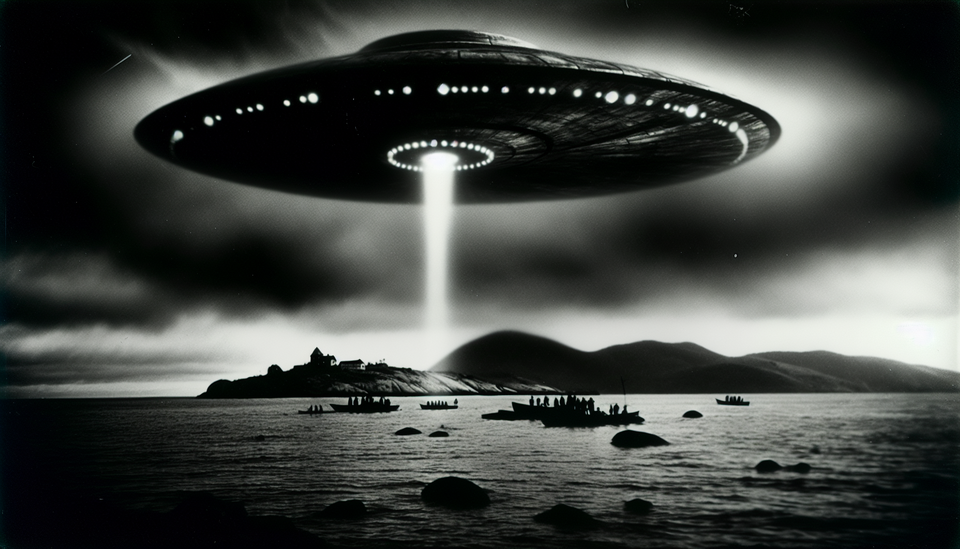
Mantell was leading a flight of four F-51s (P-51s) when they were asked by Godman Army Airfield tower to investigate a large, silvery object hovering at high altitude. After climbing to approximately 25,000 feet, Mantell radioed that the object was “metallic and tremendous in size” before losing consciousness due to oxygen deprivation. His aircraft entered a dive and crashed, killing him instantly.
The Air Force initially classified the object as “unidentified,” but later attributed it to a Navy Skyhook balloon project, though that explanation remains contested due to discrepancies in balloon flight records and witness descriptions of the object’s appearance and behavior.
Thomas Mantell 1948 Fatal Pursuit - Context
The Mantell incident occurred at the dawn of the Cold War UFO wave, just months after Kenneth Arnold’s 1947 sighting coined the term “flying saucer.” It was the first time a military pilot died while actively pursuing a UFO, setting a precedent for how the Air Force would handle future aerial encounters.
The case gained widespread media attention and contributed to the establishment of Project Sign, the first official U.S. Air Force UFO investigation program. It also highlighted the risks of high‑altitude interception without adequate oxygen systems—a lesson that influenced later pilot safety protocols.
Geographically, the incident took place in the central United States, an area that would later become a hotspot for UFO reports during the 1952 Washington D.C. flap. The crash site near Franklin, Kentucky, remains a point of interest for researchers.
Thomas Mantell 1948 Fatal Pursuit - Incident Timeline
Thomas Mantell 1948 Fatal Pursuit - Competing Explanations
Skyhook balloon [1][2]
The Navy’s Skyhook balloon project was active in the region and could explain a high‑altitude silvery object.
Witnesses described the object as appearing solid and stationary, unlike a drifting balloon; balloon flight records do not match the date.
Extraterrestrial craft [3]
Multiple trained observers reported a metallic, disc‑shaped object exhibiting unusual flight characteristics.
No physical evidence of non‑human technology recovered; official investigation concluded balloon was most likely explanation.
Secret military aircraft [4]
Early Cold War secret projects (e.g., flying‑wing prototypes) could have been mistaken for a UFO.
No declassified records confirm a secret aircraft operating in the area at that time.
Thomas Mantell 1948 Fatal Pursuit - Eyewitness Testimony
"I’m going to 20,000 feet. If I’m no closer, I’ll abandon chase."
"The object appeared as a large, silvery disc hanging motionless at high altitude."
"It was like a huge, metallic umbrella. I’ve never seen anything like it."