
1976 Tehran UFO Incident

Silhouette of a fighter jet
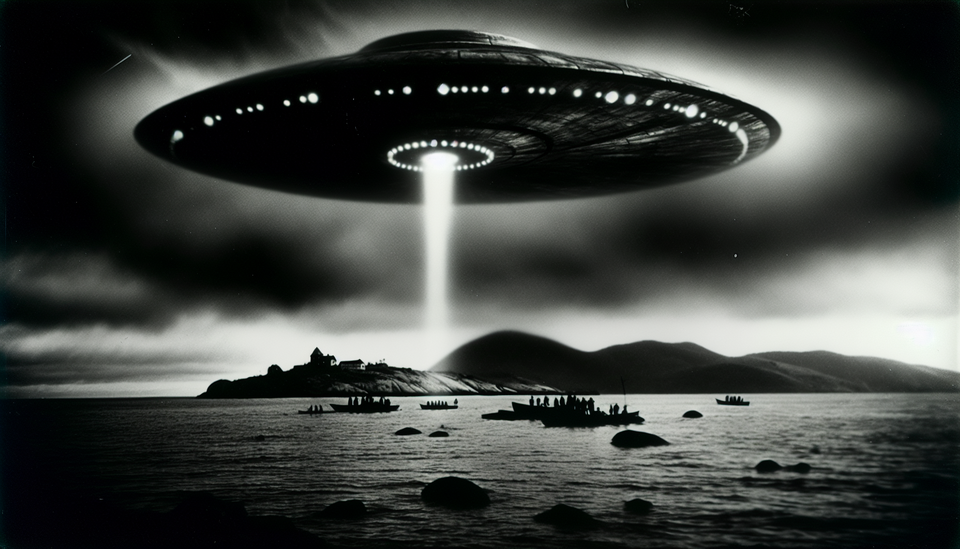
AI visualization based on witness descriptions. This is a dramatization, not a photograph.
DATE 19 September 1976
LOCATION Tehran, Iran (35.6892°N 51.3890°E)
CLASSIFICATION RADAR VISUAL MILITARY
EVIDENCE QUALITY HIGH
A radar‑visual UFO encounter over Tehran involving two Imperial Iranian Air Force F‑4 Phantom II jets that experienced instrument and communication failures while attempting to intercept a brightly lit object.
2 F‑4 JETS SCRAMBLED [1]

The 1976 Tehran UFO incident is one of the most well‑documented military UFO encounters, involving radar confirmation, multiple visual witnesses, and electromagnetic effects on aircraft systems. During the early morning hours of 19 September 1976, civilian reports of a bright object over Tehran prompted the Imperial Iranian Air Force to scramble two F‑4 Phantom II jet interceptors.

The first jet, piloted by Lieutenant Yaddi Nazeri, lost all instruments and communications as it approached the object, regaining them only after turning away. The second jet, piloted by Major Parviz Jafari with weapons officer First Lieutenant Jalal Damirian, acquired radar lock on an object comparable in size to a Boeing KC‑135 Stratotanker. As Jafari closed in, his communications and weapons systems failed; when he attempted to fire an AIM‑9 Sidewinder missile, the entire weapons panel shut down. The failures reversed once the jet withdrew.

The incident was reported to the U.S. Joint Chiefs of Staff on the same day. It remains a staple of military‑UFO literature due to its multiple‑sensor data, credible military witnesses, and documented instrument malfunctions.

1976 Tehran UFO Incident - Context

The 1976 Tehran incident occurred during a period of heightened U.S.–Iran military cooperation under the Shah. The sophistication of Iranian radar and the involvement of frontline American‑built F‑4s gave the encounter credibility in Western defense circles. The case is frequently cited in U.S. military and intelligence discussions of unidentified aerial phenomena, including the 2021 UAP Task Force report.

The incident’s documentation—including official Iranian military reports, U.S. defense memos, and pilot testimonies—makes it a benchmark for evaluating radar‑visual cases with electromagnetic effects. It illustrates the potential operational security implications of UAP encounters for military aviation.

1976 Tehran UFO Incident - Incident Timeline

1976-09-19 00:30L
Tehran (35.6892°N 51.3890°E)
Civilians report a shining object in the sky above Tehran [1]
1976-09-19 01:00L
Imperial Iranian Air Force Base
First F‑4 Phantom II (pilot Lt. Yaddi Nazeri) scrambled to investigate [1]
1976-09-19 01:15L
Near Tehran
Nazeri loses all instruments and communications, returns to base [1]
1976-09-19 01:30L
Imperial Iranian Air Force Base
Second F‑4 (pilot Maj. Parviz Jafari, WSO 1st Lt. Jalal Damirian) scrambled [1]
1976-09-19 01:45L
Approx 50 km from Tehran
Jafari acquires radar lock on object at 27 nautical miles, size comparable to KC‑135 [1]
1976-09-19 01:50L
Intercept course
Jafari experiences communications failure, weapons‑system shutdown when attempting to fire Sidewinder [1]
1976-09-19 02:00L
U.S. Joint Chiefs of Staff
Initial report of incident relayed to U.S. military [1]
1976-09-19 02:30L
Tehran area
Jafari observes a smaller object detach from primary object and descend toward ground, landing without explosion [1]

1976 Tehran UFO Incident - Competing Explanations

Extraterrestrial or Non‑Human Craft [1]

Supporting Evidence

Radar confirmation, structured object description, electromagnetic effects on advanced military aircraft, multiple independent witnesses including trained pilots.

Conflicting Evidence

No physical evidence recovered; no known propulsion system matches described capabilities.

Misidentification of Jupiter or Bright Star [1]

Supporting Evidence

Astronomer Philip J. Klass suggested Jupiter as possible initial visual stimulus; bright planet could appear as stationary light.

Conflicting Evidence

Does not account for radar returns, instrument malfunctions, object movement, or the second object that detached and descended.

Secret Military Test (U.S. or Soviet) [1]

Supporting Evidence

Advanced experimental aircraft could explain radar returns and electronic‑warfare capabilities; Cold War context plausible.

Conflicting Evidence

No declassified record of such a test over Tehran; unlikely that secret project would risk engagement with allied Iranian jets.

Psychological/Perceptual Error [1]

Supporting Evidence

Stress of night interception could amplify misperceptions; known tendency to misinterpret celestial objects.

Conflicting Evidence

Radar corroboration eliminates purely perceptual explanation; multiple aircraft and ground witnesses report same object.

1976 Tehran UFO Incident - Eyewitness Testimony

Major Parviz Jafari Imperial Iranian Air Force squadron commander [Named in U.S. defense memo and subsequent interviews; retired as brigadier general]
"It was flashing with intense red, green, orange and blue lights so bright that I was not able to see its body."
Interview with The Times, 2007 [1]
Lieutenant Yaddi Nazeri Imperial Iranian Air Force pilot [Named in official Iranian report and U.S. memo]
"All my instruments went out. The radio was dead. When I turned back, everything came back on."
Report to IIAF investigators, September 1976 [1]
First Lieutenant Jalal Damirian Weapons systems officer, second F‑4 [Listed in U.S. defense memo and Iranian records]
"We had a solid radar lock. It was the size of a tanker aircraft, but it wasn’t broadcasting any IFF."
Recounted in later documentary interviews [1]
Civilian Witnesses (multiple) Tehran residents [Reported to local authorities and news outlets]
"A very bright object, changing colors, hanging in the sky for over an hour."
Summary of civilian reports compiled by Iranian police [1]

1976 Tehran UFO Incident - Physical Evidence

Radar Data
Ground‑based radar returns from Iranian military radar and airborne radar from F‑4 Phantom II. [1]
Sensor Specification: Type: Ground‑based military radar; airborne AN/APQ‑120 | Platform: Iranian air‑defense network; F‑4 Phantom II | Operator: Imperial Iranian Air Force | Data: Primary radar returns | Corroboration: Multiple sensors
Document Provenance: Released by U.S. Defense Department on 1976 via internal memo. Authentication: verified by U.S. Joint Chiefs of Staff
Current Status: Mentioned in declassified U.S. memo; raw data not publicly released
Official Memo
U.S. Defense Department message summarizing incident, relayed to Joint Chiefs of Staff. [1]
Document Provenance: Released by U.S. Department of Defense on 1976 via classified memo. Authentication: declassified via FOIA
Current Status: Available via FOIA; cited in U.S. government UAP reports

1976 Tehran UFO Incident - Official Investigation

Investigating Body: Imperial Iranian Air Force; U.S. Defense Department
Methodology: Pilot debriefings, radar‑data review, analysis of aircraft system logs
Findings: Multiple radar contacts correlated with visual sightings; confirmed electromagnetic interference with F‑4 avionics and weapons systems; no hostile intent demonstrated [1]
Official Conclusion: Unidentified aerial phenomenon with advanced electronic‑warfare capability; no conventional explanation determined

📁 Official Documents & FOIA Releases

📄 The Vault Files: 1976 Iran Incident - The Black Vault Case Files

DIA Intelligence Report (Initial ... a three-page message that was classified at the time but later released under FOIA on August 31, 1977[37]. This report, often referred to as the “...

SOURCE LOG
1 Wikipedia – 1976 Tehran UFO incident [Link] [secondary]
2 U.S. Defense Department memo – “Unidentified Flying Object Sightings Over Tehran” (1976) [Link] [primary]
3 The Times – “Iranian jet pilots tell of UFO dogfight” (2007) [Link] [secondary]
4 FOIA release – CIA document on Tehran incident [Link] [primary]
5 UAP Task Force report – Reference to historical military cases [Link] [secondary]
Editorial Note: This case file presents documented evidence and testimony regarding the 1976 Tehran UFO Incident. All statements are sourced with inline citations. Competing explanations are presented with equal analytical weight. UAPI does not draw conclusions about the nature or origin of observed phenomena.