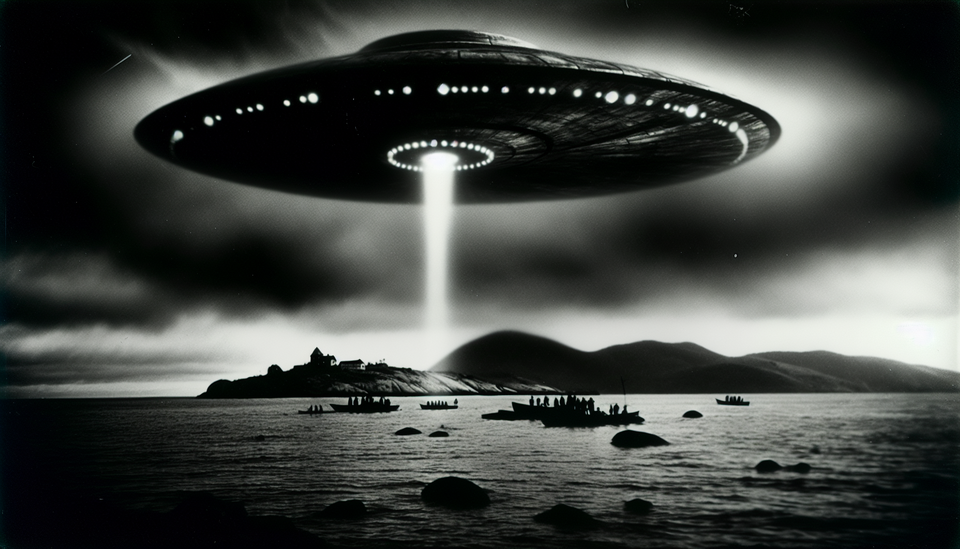
Multiple radar systems at two USAF bases tracked high-speed objects while RAF interceptors were scrambled; the Condon Committee concluded "the probability that at least one genuine UFO was involved appears to be fairly high."
A De Havilland Venom night fighter similar to those scrambled during the Lakenheath-Bentwaters incident. Photo: Wikimedia Commons, CC BY 2.0.
DATEAugust 13-14, 1956
LOCATIONSuffolk, England (52.41°N 0.56°E)
CLASSIFICATIONRADAR-VISUAL
EVIDENCE QUALITYHIGH
Multiple radar systems at two USAF bases tracked high-speed objects while RAF interceptors were scrambled; the Condon Committee concluded "the probability that at least one genuine UFO was involved appears to be fairly high."
3RADAR SYSTEMS TRACKED OBJECTS
On the night of August 13-14, 1956, radar operators and ground personnel at RAF Bentwaters and RAF Lakenheath in Suffolk, England, tracked and observed multiple unidentified objects. The incident involved personnel from both the Royal Air Force (RAF) and the United States Air Force (USAF) and included radar contacts, visual sightings, and attempted interceptions by RAF Venom fighters.
The sequence began at 21:30 when Bentwaters radar tracked a target approaching from the sea at several thousand miles per hour. Additional targets were tracked, including a group that merged into a single large return. At 22:55, a target was detected approaching at an estimated 2,000 to 4,000 mph. As it passed overhead, ground personnel observed a rapidly moving white light, and a C-47 pilot at 4,000 feet reported a similar light passing beneath his aircraft. Lakenheath was alerted and ground personnel there made visual sightings of luminous objects that appeared to merge before moving off.
RAF Venom interceptors from 23 Squadron at RAF Waterbeach were scrambled. According to accounts from Technical Sergeant Forrest Perkins (Lakenheath Watch Supervisor) and Flight Lieutenant Freddie Wimbledon (RAF Neatishead radar controller), the first Venom achieved radar contact but the target then maneuvered behind the aircraft and appeared to chase it for approximately 10 minutes.
However, later research located the actual aircrews involved. Flying Officers David Chambers and John Brady (first Venom) and Flying Officers Ian Fraser-Ker and Ivan Logan (second Venom) stated that radar contacts were "unimpressive" and no "tail chase" occurred. Chambers commented: "My feeling is that there was nothing there, it was some sort of mistake."
Despite these contradictions, the Condon Committee concluded: "This is the most puzzling and unusual case in the radar-visual files. The apparently rational, intelligent behavior of the UFO suggests a mechanical device of unknown origin as the most probable explanation."
Lakenheath-Bentwaters 1956 Radar-Visual - Context
The incident occurred during the Perseid meteor shower, which skeptic Philip J. Klass cited as a potential explanation for some visual sightings. The bases involved were USAF-tenanted RAF facilities during the Cold War, with significant radar and air defense capabilities.
The case gained prominence because it was selected for detailed analysis by the Condon Committee, the USAF-funded scientific study that otherwise generally concluded UFOs were misidentifications. The Committee's researcher, Gordon Thayer, felt anomalous propagation was possible but unlikely given the lack of other spurious targets. His conclusion that the incident suggested "a mechanical device of unknown origin" was remarkable given the study's overall skeptical bent.
British researchers David Clarke, Andy Roberts, Martin Shough, and Jenny Randles later conducted extensive investigation, locating the actual interceptor aircrews. Their findings complicated the case significantly: the pilots and navigators contradicted the dramatic "tail chase" account given by radar operators Perkins and Wimbledon. The discrepancy between ground controller accounts and aircrew accounts remains unexplained, with some researchers suggesting possible radar spoofing technology testing.
First Venom interceptor from 23 Squadron scrambled (FO Chambers/Brady); second Venom at 0240 [3]
1956-08-14 0210L
Near Lakenheath (52.41°N 0.56°E)
Perkins/Wimbledon account: First Venom achieves contact, target maneuvers behind aircraft and "chases" it for ~10 min; Aircrew account: contacts "unimpressive," no tail chase occurred [4]
Multiple radar systems tracked objects. Visual sightings corroborated radar contacts. Condon Committee concluded "the probability that at least one genuine UFO was involved appears to be fairly high." Researcher Thayer called it "the most puzzling and unusual case in the radar-visual files." Classified teleprinter message three days later confirmed events.
Conflicting Evidence
The actual interceptor aircrews, when located decades later, stated radar contacts were "unimpressive" and denied any "tail chase." Pilot Chambers stated "my feeling is that there was nothing there." The discrepancy between radar operator and aircrew accounts undermines the dramatic elements of the case.
Perseid meteors combined with anomalous radar propagation [6]
Supporting Evidence
Philip Klass noted the incident occurred during the Perseid meteor shower; observers noted "an unusually large number of shooting stars." Anomalous propagation can create false radar targets. Some visual sightings (amber light) were identified as Mars.
Conflicting Evidence
Radar tracked objects for extended periods, inconsistent with meteor behavior. Ground visual sightings described objects that changed direction and merged, not meteor characteristics. Condon Committee researcher felt anomalous propagation unlikely given lack of other spurious targets.
Radar spoofing or electronic warfare testing [7]
Supporting Evidence
Cold War military bases would be logical targets for testing countermeasures. Radar jamming and deception technology existed. The discrepancy between ground radar operators and aircrews could indicate the "targets" existed only on ground radar, not as physical objects.
Conflicting Evidence
No official records of such testing have been released. Visual sightings by ground personnel and the C-47 pilot would not be explained by radar-only spoofing. Some researchers consider this speculative.
Technical Sergeant Forrest PerkinsWatch Supervisor, Lakenheath Radar Air Traffic Control Center, USAF[Position verified via USAF records and Condon Committee correspondence]
"The UFO target maneuvered behind the Venom and chased it for a period of around 10 minutes. The pilot was getting worried, excited and also pretty scared."
"It was my team who directed the two Venoms to the interception. The incident involved a solid radar return tracked from three sets on the ground and one in the intercepting aircraft."
Letter to Sunday Times, March 19, 1978 [5]
Flying Officer David ChambersPilot, first Venom interceptor, 23 Squadron RAF[RAF service verified; located and interviewed by British researchers]
"My feeling is that there was nothing there, it was some sort of mistake."
Interview with researchers Clarke, Roberts, Shough, and Randles, conducted decades after incident [3]
Ivan LoganNavigator, second Venom interceptor, 23 Squadron RAF[RAF service verified via interview]
"All we saw was a blip which rather indicated a stationary target."
Interview with researchers, conducted decades after incident [3]
Multiple radar systems at RAF Bentwaters and RAF Lakenheath tracked targets displaying high speeds (estimated 2,000-4,000 mph) and unusual behavior. Ground-based radar and reported airborne radar contacts from interceptor. [1]
Sensor Specification: Type: 1950s USAF/RAF ground-based radar systems | Platform: Ground-based (Bentwaters, Lakenheath, Neatishead) | Operator: USAF and RAF personnel | Data: Tracking and ranging | Corroboration: Multiple stations; later aircrews disputed contact quality
Provenance: Released by Project Blue Book file; declassified teleprinter message on 1956 (original); released via FOIA via Official military records. Authentication: Analyzed by Condon Committee
Current Status: Documented in official records; aircrew later disputed dramatic interpretations
Visual
Multiple visual sightings from ground personnel at both bases and from C-47 pilot at 4,000 feet. Objects described as luminous, rapidly moving white lights. Two objects observed to merge before departing. [2]
Provenance: Released by Witness testimony in Project Blue Book and Condon Committee files on 1956-1968 via Official investigation records. Authentication: Documented in classified teleprinter message and Condon Report
Current Status: Visual sightings corroborated radar; some (amber light) identified as Mars
Lakenheath-Bentwaters 1956 Radar-Visual - Official Investigation
Investigating Body: Project Blue Book (USAF); Condon Committee (scientific study); British researchers (Clarke, Roberts, Shough, Randles)
Methodology: Blue Book: Original documentation. Condon Committee: Analysis of Blue Book file and Perkins correspondence; assessment of anomalous propagation and other explanations. British researchers: Located and interviewed actual interceptor aircrews decades later.
Findings: Blue Book: Case documented in files. Condon Committee: Researcher Thayer concluded anomalous propagation unlikely; stated case was "most puzzling" in radar-visual files and suggested "mechanical device of unknown origin." British research: Aircrews contradicted tail-chase account; stated contacts were "unimpressive." [1]
Conclusion: Condon Committee stated: "Although conventional or natural explanations certainly cannot be ruled out, the probability of such seems low in this case and the probability that at least one genuine UFO was involved appears to be fairly high." However, later interviews with actual interceptor aircrews cast doubt on the most dramatic elements of the incident.
SOURCE LOG
1Condon Report, Case 2. "Scientific Study of Unidentified Flying Objects." University of Colorado, 1968, p. 387. [Link][primary]
2McDonald, James E. "Science in Default." Paper presented to American Association for the Advancement of Science, December 1969.[primary]
3Clarke, David; Roberts, Andy; Shough, Martin; Randles, Jenny. "Lakenheath Collaboration." Research interviews with original aircrews.[primary]
4Perkins, Forrest. Letter to Condon Committee, February 1968. Primary account of events from Lakenheath Watch Supervisor.[primary]
5Wimbledon, Freddie. Letter to Sunday Times, March 19, 1978. RAF Neatishead controller account.[primary]
6Klass, Philip J. "UFOs Explained." Random House, 1974, pp. 214-215. Skeptical analysis citing Perseid meteors.[secondary]
7Mystery Wire. "Navy's NEMESIS tied to UFO reports." November 27, 2019. Radar spoofing hypothesis.[secondary]
Editorial Note: This case file presents documented evidence regarding the Lakenheath-Bentwaters 1956 Radar-Visual. All statements are sourced with inline citations. Note: Later interviews with interceptor aircrews contradicted the dramatic "tail chase" accounts from radar operators. Competing explanations are presented with supporting and conflicting evidence noted. UAPI does not draw conclusions about the nature or origin of reported phenomena.