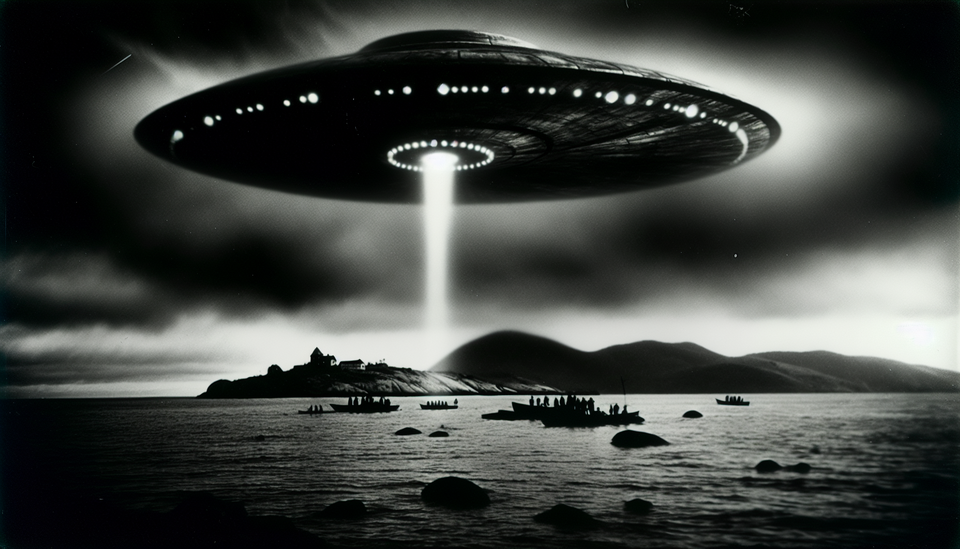
Judaea 65 AD Armies in the Sky
The Jewish historian Josephus and later Roman historian Tacitus record that before the destruction of Jerusalem, witnesses throughout Judaea observed armies and chariots in the clouds surrounding cities.
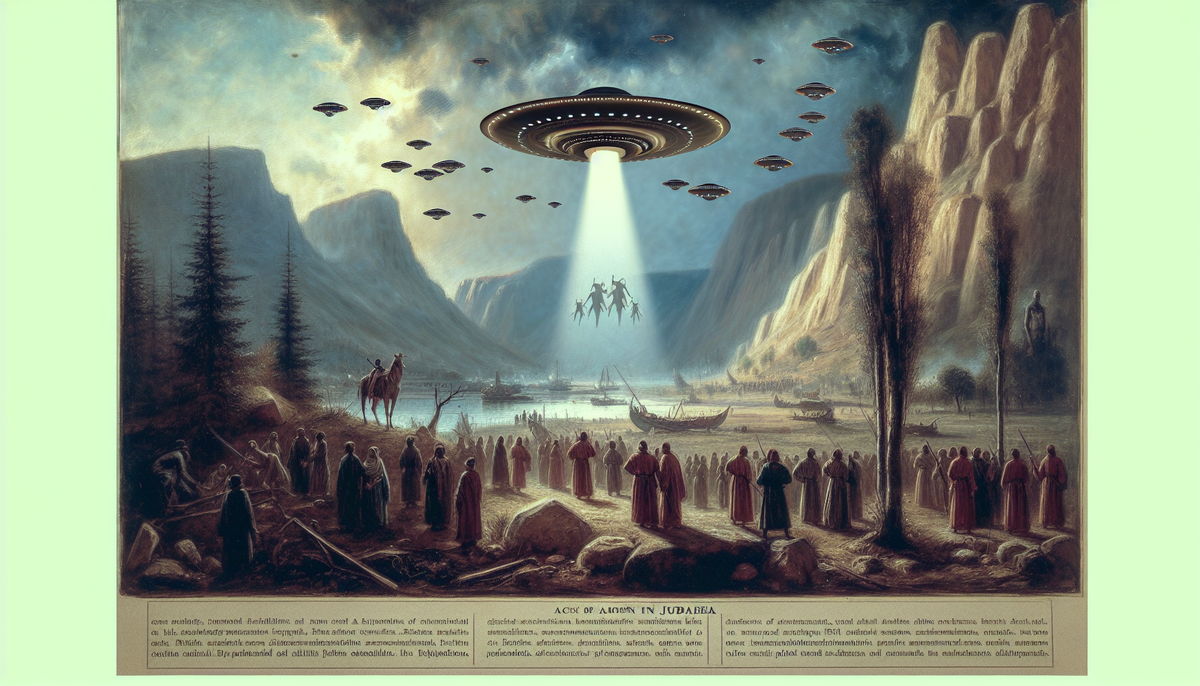
The Jewish-Roman historian Flavius Josephus (37-100 AD) records in his work "The Jewish War" (De Bello Judaico) that before the outbreak of the First Jewish-Roman War (66-73 AD), extraordinary phenomena were observed throughout Judaea. Among these, Josephus describes chariots and armed battalions seen "running about among the clouds, and surrounding of cities."
The Roman historian Tacitus (56-120 AD) independently corroborates this account in his "Histories," stating that "there had been seen hosts joining battle in the skies, the fiery gleam of arms." Both authors present these observations within lists of prodigies that preceded the war, a standard historiographical convention for both Jewish and Roman writers.
Josephus was himself a participant in the war and later became a Roman citizen. His account carries particular weight as a first-generation source writing within decades of the reported events. The correlation with Tacitus, writing independently from Roman sources, provides unusual multi-source attestation for an ancient anomaly report.
Historical Context
The period of 65-66 AD was extraordinarily turbulent in Judaea. Tensions between the Jewish population and Roman authorities had been escalating for years. The province would soon erupt into the First Jewish-Roman War, which culminated in the destruction of the Second Temple in 70 AD.
Both Jewish and Roman historiographical traditions routinely recorded prodigies (unusual phenomena) as portents of significant events. These were understood as divine communications regarding impending developments. The framing of aerial phenomena as military imagery (armies, chariots, weapons) reflects the martial context of the period and may have shaped how observers interpreted what they witnessed.
Event Timeline
Witness Accounts
"Chariots and troops of soldiers in their armor were seen running about among the clouds, and surrounding of cities."
"There had been seen hosts joining battle in the skies, the fiery gleam of arms."
Competing Explanations
Observation of unexplained aerial phenomena [1][3][4]
Two independent ancient sources (Josephus and Tacitus) report the phenomenon. The account specifies structured objects (chariots, figures) rather than amorphous lights. Mass observation throughout a region suggests widespread event.
Military imagery may reflect interpretive framework rather than actual observation. Prophetic expectations may have shaped perception. No physical evidence preserved.
Atmospheric optical phenomena (mirages, auroral displays) [4]
Complex atmospheric conditions can create structured apparitions. Fata Morgana mirages can project ground images into the sky. Unusual auroral activity could appear as moving lights.
The specific identification of chariots and armed troops suggests more than vague lights. Duration and regional extent exceed typical atmospheric events. Two independent traditions record similar details.
Mass psychological phenomenon driven by apocalyptic expectations [4]
Jewish apocalyptic literature predicted celestial signs. Heightened anxiety before the war could generate collective perception. Cultural frameworks provided ready interpretation.
Josephus and Tacitus represent different cultural traditions (Jewish and Roman). The observations are presented as widely witnessed rather than limited to specific groups. Details are consistent across accounts.
Historiographical convention rather than literal observation [2][4]
Ancient historians routinely included prodigies before major events. Such portents served narrative and theological purposes. The formula of pre-war signs was conventional.
Josephus was a participant in the events and wrote within decades. His credibility as eyewitness to the war extends to pre-war observations. Independent corroboration by Tacitus suggests underlying event.