Ireland Medieval Aerial Ship Accounts (956-1211 AD)
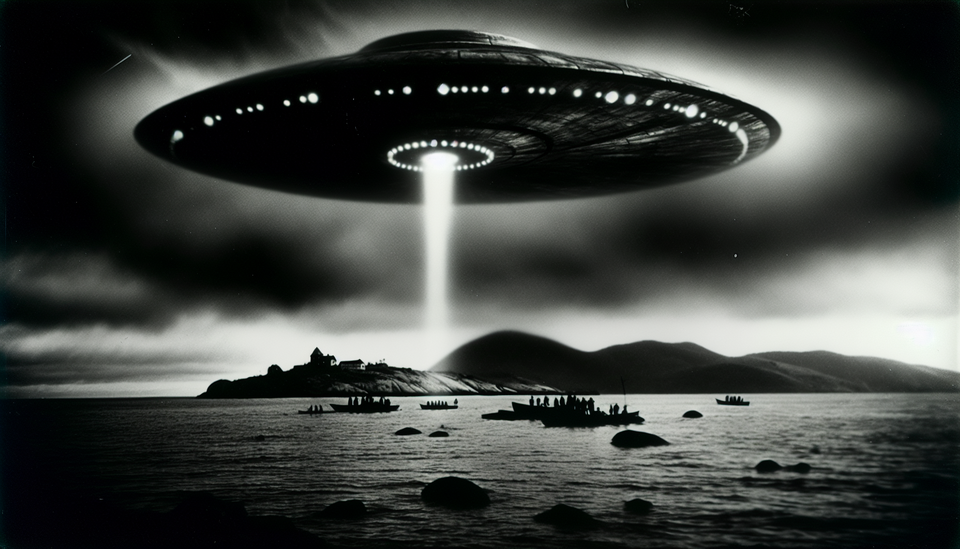
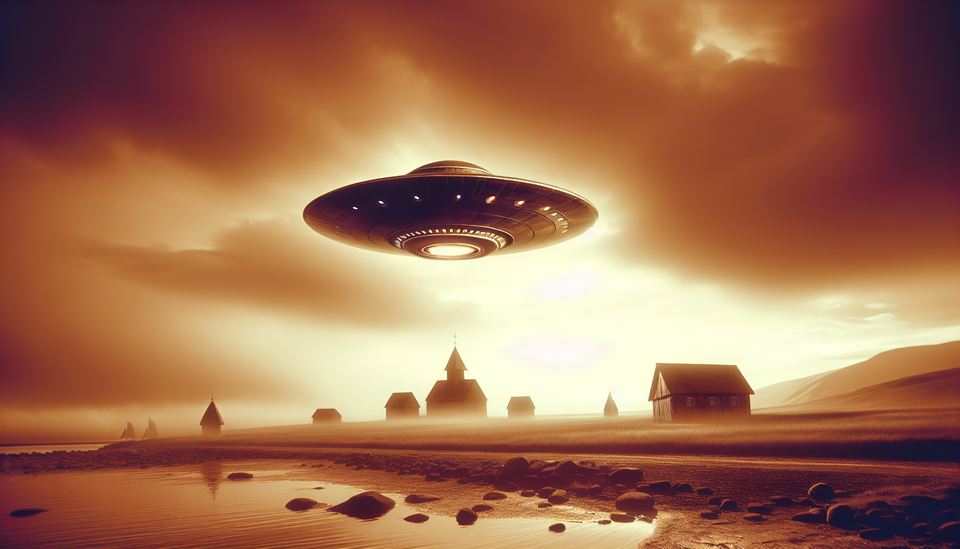
Multiple medieval Irish texts spanning several centuries record incidents of "ships sailing through the air" over monasteries, with remarkably consistent details including anchors dropping from the vessels and becoming entangled.
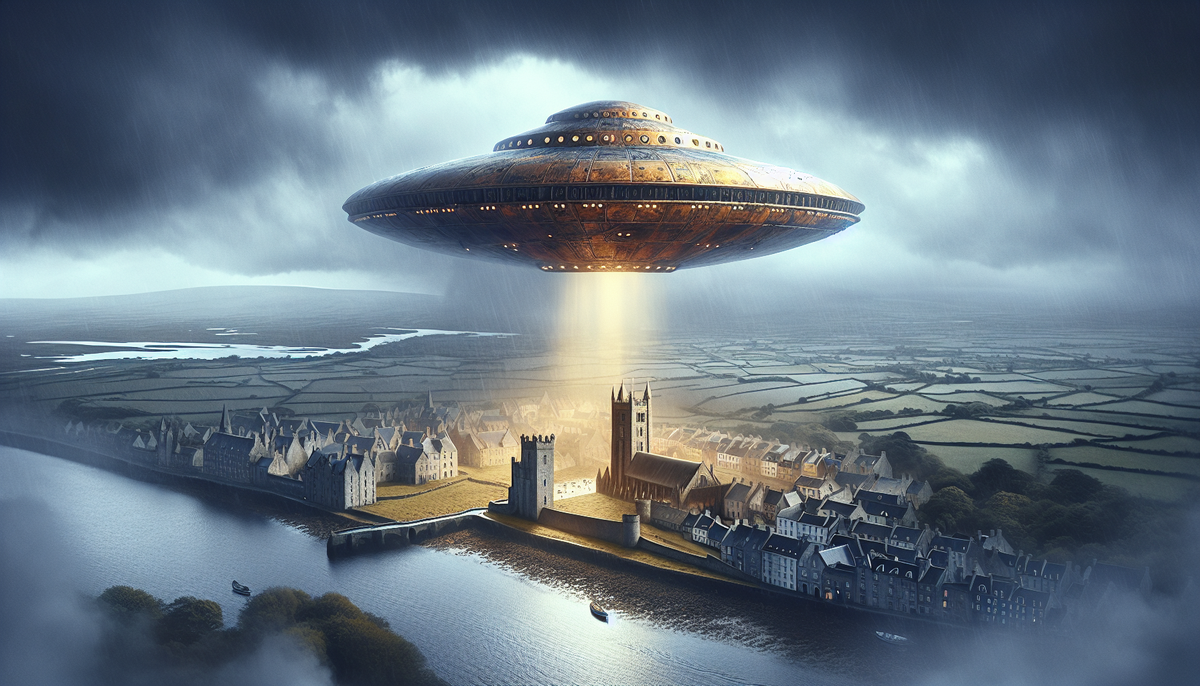
Medieval Irish literary and historical sources preserve multiple accounts of aerial ships appearing over Ireland across several centuries. These accounts share remarkably consistent elements: vessels described as sailing through the air, anchors dropping from the ships, and interactions between aerial crew and people on the ground.
The most frequently cited accounts include an incident at Cloera (dated variously to 749 or later), an event at Clonmacnoise monastery (commonly dated c. 956 AD), and references in texts compiled through the 12th century. The accounts appear in sources including Irish annals, the Lebor Gabála Érenn (Book of Invasions), and later medieval compilations such as the Speculum Regale (King's Mirror).
The consistency of the "anchor" motif across sources spanning centuries raises interpretive questions. This pattern could indicate: (1) a persistent phenomenon that was repeatedly observed; (2) a literary trope that later chroniclers borrowed from earlier sources; or (3) a folkloric tradition that became embedded in historical chronicle writing. The accounts cannot be verified independently, and the manuscript traditions involve texts compiled centuries after alleged events.
Historical Context
Medieval Ireland maintained a sophisticated literary and monastic culture that produced extensive historical chronicles, annals, and compilations. Irish monasteries such as Clonmacnoise were major centers of learning and manuscript production. The annalistic tradition recorded significant events year by year, though entries were sometimes added or edited by later copyists.
The period from the 8th to 13th centuries saw Irish monasteries produce works that blended historical record with mythology, genealogy, and religious interpretation. The Lebor Gabála Érenn, which contains some aerial ship references, is explicitly a synthetic work combining legendary and historical material. This context requires careful evaluation of any claims drawn from these sources.
The aerial ship accounts also have parallels in other medieval European literature, including the Magonia tradition documented by Agobard of Lyon (c. 815 AD). Whether these parallels indicate shared observation, cultural diffusion, or independent development of similar folklore remains debated.
Timeline of Accounts
Source Accounts
"A ship was seen in the air... The anchor was caught on the arch of the door. A man came down from the ship, and swam as if in water down to the anchor."
"[No direct quote; reported as collective witnesses in chronicle accounts]"
Competing Explanations
Observation of unexplained aerial phenomena interpreted through available concepts [1][4]
Multiple accounts across centuries and locations suggest something was observed. The consistency of specific details (anchor, rope, crewman) across independent sources is notable. Medieval observers would describe aerial objects using familiar maritime vocabulary.
No independent corroboration outside Irish literary tradition. The manuscript traditions involve texts compiled long after alleged events. Similar stories appear in other cultures, suggesting possible literary borrowing or universal folklore motif.
Literary and folkloric tradition without underlying phenomenon [4][5]
The Lebor Gabála explicitly mixes legendary and historical material. Irish scholars were aware of Continental traditions including Magonia. The accounts may represent a literary trope adopted by chroniclers. Later sources may have copied earlier ones.
The specific "anchor" detail is remarkably consistent and unusual. Multiple independent chronicle traditions preserve similar accounts. The detail of the crewman "drowning" in earthly atmosphere suggests a consistent underlying narrative.
Misidentified natural or atmospheric phenomena [5]
Unusual cloud formations, mirages, or atmospheric optical effects could appear as structures in the sky. Objects suspended by unusual wind conditions might suggest "anchors." Medieval observers lacked scientific framework for atmospheric phenomena.
The accounts describe structured objects with specific features (hull, anchor, crew), not amorphous lights or shapes. The interaction narratives (freeing anchors, crewmen descending) go beyond simple misidentification of natural phenomena.
Symbolic or allegorical religious narrative [4]
Medieval Irish literature frequently employed allegory. Ships had symbolic significance in Christian iconography (Church as ship). The accounts might represent theological or moral narratives rather than observational reports.
The accounts are presented in annalistic/historical rather than explicitly allegorical contexts. The specific mundane details (anchor catching on door) do not obviously serve allegorical purposes.