Columbus 1492: The Light Before Landfall
On October 11, 1492, Columbus recorded seeing a light "like a small wax candle that rose and lifted up" four hours before landfall. Authenticated primary source with multiple conventional explanations.
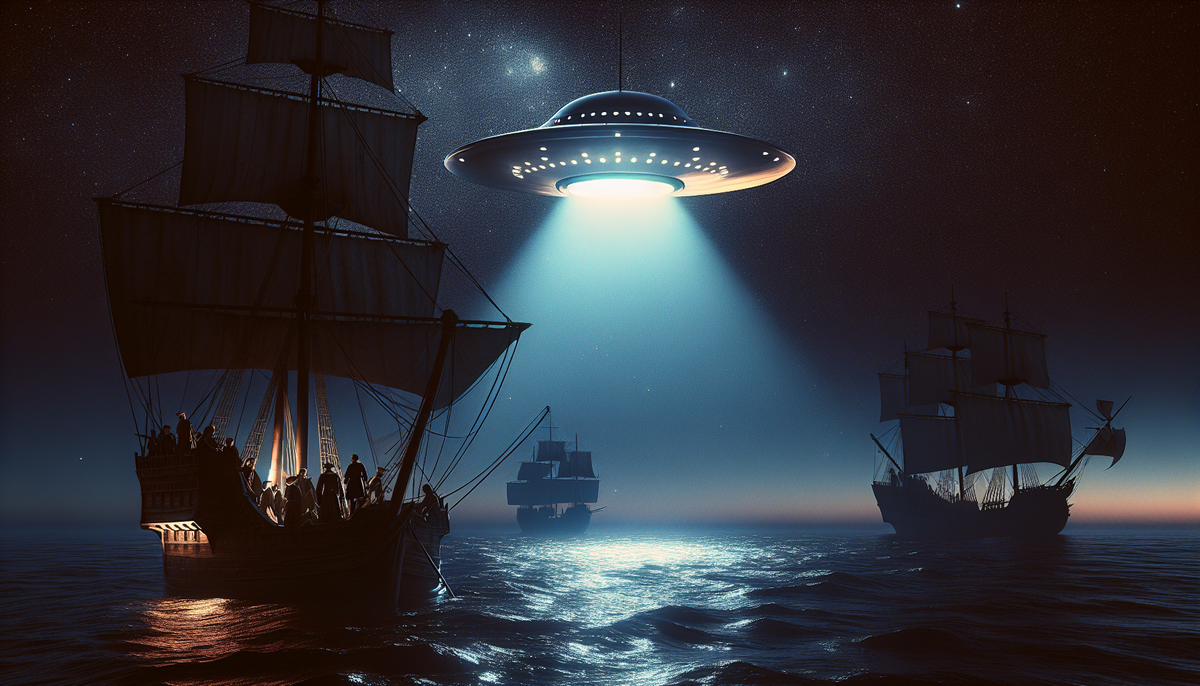
On the night of October 11, 1492, just hours before the historic landfall in the Americas, Christopher Columbus recorded observing an unusual light from the deck of the Santa María. According to the ship's log as preserved in the Abstract by Bartolomé de las Casas, Columbus saw "a light like a small wax candle that rose and lifted up."
Columbus called Pedro Gutiérrez, the royal steward, who also reportedly observed the light. A third man, Rodrigo Sánchez de Segovia, was called but stated he did not see it. The sighting occurred approximately four hours before land was sighted by lookout Rodrigo de Triana aboard the Pinta.
The account survives through Las Casas's transcription of Columbus's original log, which has been lost. While the Las Casas abstract is generally considered reliable, it represents a secondary source. Multiple conventional explanations have been proposed, including native fishing torches on a closer island that was bypassed, and bioluminescence, though the latter has been challenged based on lunar phase analysis.
Historical Context
Columbus's first voyage departed Spain on August 3, 1492, with three ships: the Santa María, Pinta, and Niña. By October 11, the crew had been at sea for over two months and tensions were high. Columbus had promised a reward to the first man to sight land, creating incentive for observation.
The original ship's log kept by Columbus has been lost. The primary surviving source is an abstract made by Bartolomé de las Casas in the 1530s. Las Casas had access to the original log and is considered a generally reliable transcriber, though his work represents an abridged version rather than a complete copy. This documentary situation is important for evaluating the account.
Timeline
Witness Accounts
"The Admiral, at ten o'clock at night, being on the sterncastle, saw a light, though it was so uncertain that he could not affirm it was land. It was like a small wax candle that rose and lifted up."
"[Called by Columbus; reportedly also saw the light]"
"[Called by Columbus; stated he did not see the light]"
Competing Explanations
Native fishing torches on nearby island [1][4]
Indigenous Taíno people used torches for night fishing. The light could have been on a closer island that the ships bypassed before reaching Guanahani. This was Columbus's own interpretation.
The description of light "rising and lifting" does not match stationary or slowly moving torches. Distance estimation at night over water is difficult.
Bioluminescence in water [4]
Caribbean waters contain bioluminescent organisms that can produce light. Ship movement could trigger glowing in disturbed water.
The account describes light in the sky/horizon, not water. Lunar phase analysis suggests significant moonlight, reducing bioluminescence visibility.
Meteor or atmospheric phenomenon [4]
Meteors can appear as rising lights before arcing down. Atmospheric phenomena could create unusual light effects.
The description emphasizes sustained or repeated observation ("rose and lifted up") rather than brief streak.
Wishful perception under pressure [1][4]
Crew was desperate to sight land after months at sea. Columbus had strong incentive to claim first sighting for the reward. Sánchez did not see it.
Gutiérrez independently confirmed sighting. Columbus was an experienced navigator. The specific description suggests actual observation rather than invention.