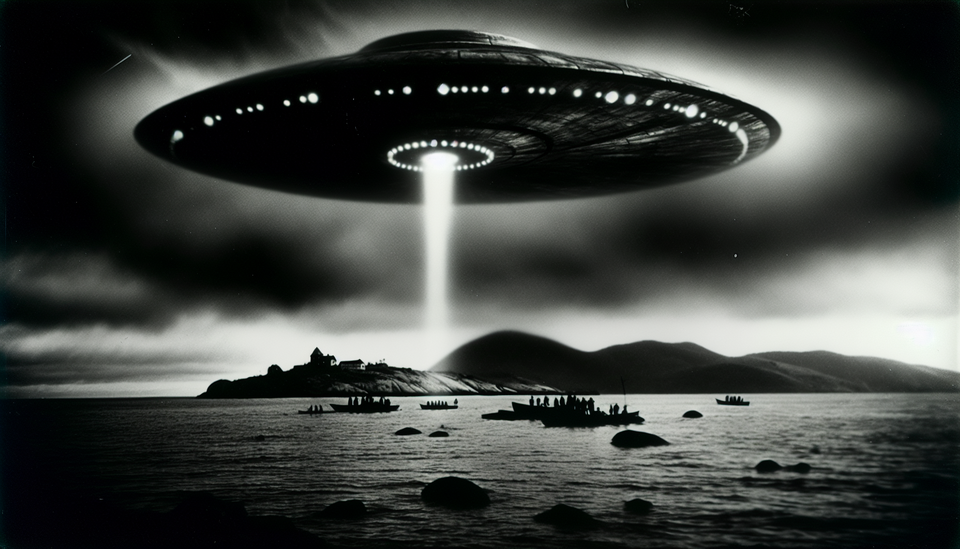
Colares Island UFO Wave (1977)
Colares Island UFO Wave (1977)
The Colares Island UFO wave of 1977, known in Brazil as "Operação Prato" (Operation Saucer), is one of the most extensively documented and disturbing UAP incidents in history. Over a period of approximately four months beginning in August 1977, residents of Colares Island and surrounding communities in the Amazon River delta region of Pará State, Brazil, reported repeated encounters with unidentified objects that allegedly directed beams of light at people, leaving physical injuries including burns, puncture wounds, hair loss, and symptoms consistent with radiation exposure. At least two deaths have been attributed to the encounters by local residents, though this remains unverified.
The incidents became so widespread and alarming that the Brazilian Air Force launched a formal investigation called "Operação Prato" (Operation Plate/Saucer) led by Captain Uyrangê Hollanda Lima, who deployed a team to Colares for several months. The team interviewed hundreds of witnesses, collected physical evidence, and personally photographed and filmed several anomalous aerial objects during their investigation. Hollanda's team produced thousands of pages of reports and several hundred photographs and approximately 16 hours of film footage.
The objects were described by witnesses in various ways: typically as bright, luminous craft of various shapes (some disc-shaped, some cigar-shaped) that flew silently and at low altitude. Many witnesses described a focused beam of light emanating from the objects that struck people, producing physical injuries. Locally, those who reported being struck by the beams were called "chupados" (the drained/sucked ones), referring to the physical effects they described.
Support Independent UAP Research
Get exclusive case analyses, deep‑dive reports, and behind‑the‑scenes updates.
Subscribe on Gumroad ($5/month)Military Investigation (Operação Prato)
The Brazilian Air Force's Operação Prato was one of the most extensive military UAP investigations conducted by any nation during the 20th century. Captain Hollanda's team was stationed on Colares Island for approximately three months. They set up observation posts, collected witness testimony, and by their own accounts directly observed and photographed anomalous aerial phenomena.
The investigation produced an estimated 2,000 photographs, 16mm film footage, and extensive written documentation. These materials were classified by the Brazilian Air Force for decades. Captain Hollanda himself gave a detailed interview in 1997 to Brazilian researcher Claudeir Covo shortly before his apparent suicide in 1997, in which he described personally witnessing the phenomena and expressed psychological distress over the nature of what he had seen.
In 2004, following advocacy by Brazilian researchers and a public campaign, the Brazilian government declassified several hundred pages of documents related to Operação Prato, releasing them through the Brazilian National Archives. The released materials confirmed the investigation's existence and scope, though a portion of the original materials has not been released.
Evidence and Physical Effects
- Photographs and film footage taken by Brazilian Air Force investigators
- Medical records of injured residents, including burns and circular lesions
- Declassified Brazilian Air Force documents (released 2004)
- Testimonies from hundreds of civilian witnesses across multiple communities
- Accounts from military investigators including Captain Hollanda's 1997 interview
Analysis and Debate
Pro-UAP arguments: The combination of mass civilian testimony, military corroboration, official government investigation, documented physical injuries, and photographic evidence makes this one of the best-documented UAP cases with physical effects in history. The scale and consistency of reports across a wide geographic area and over multiple months is difficult to explain by conventional means. The Brazilian military's own investigators reportedly became convinced they were dealing with a genuine unexplained phenomenon.
Skeptical arguments: The photographic evidence has not been independently analyzed and the original film footage has not been fully released. Physical injuries attributed to the encounters could have alternative explanations. Hollanda's death shortly after his interview, which occurred before he could verify the transcript, leaves his account impossible to corroborate. The reports emerged from an isolated, under-resourced community, creating the possibility of social contagion effects.